
'/%3E%3C/svg%3E)
'/%3E%3Cpath%20fill='%23b2b2b2'%20d='M241%20382q0%2016%2017%2026%2017%2011%2042%2011t42-11q16-11%2017-26V269H241'/%3E%3Cpath%20fill='%239f7e00'%20d='M241%20379q0%2014%208%2023%209%209%2021%209%2014%200%2021-9%209-9%209-23V269h-59'/%3E%3Cpath%20d='M241%20339v-70h59v110q0%2014-9%2023l-6%205v-68h-15v72q-8%200-14-4v-68zm59%2040c0%2022%2015%2032%2029%2032%2021%200%2030-18%2030-32v-40h-59'/%3E%3Cpath%20fill='%239f7e00'%20d='M266%20277v5h2v12h-3v-5h2v-5h-9v5h2v5h-4v9h3v18h-5v10h34v-10h-5v-18h3v-9h-4v-5h2v-5h-9v5h2v5h-3v-12h2v-5zm42%20101q0%2010%206%2017%206%206%2015%207%2010-1%2016-7%206-7%206-17v-29h-43'/%3E%3Ccircle%20fill='%230044ad'%20cx='329.5'%20cy='372'%20r='6'/%3E%3Cellipse%20fill='%230044ad'%20cx='300'%20cy='340'%20rx='16'%20ry='21'/%3E%3C/svg%3E)


Millennium Challenge 2002 and the strategic limitations of an intervention in Iran
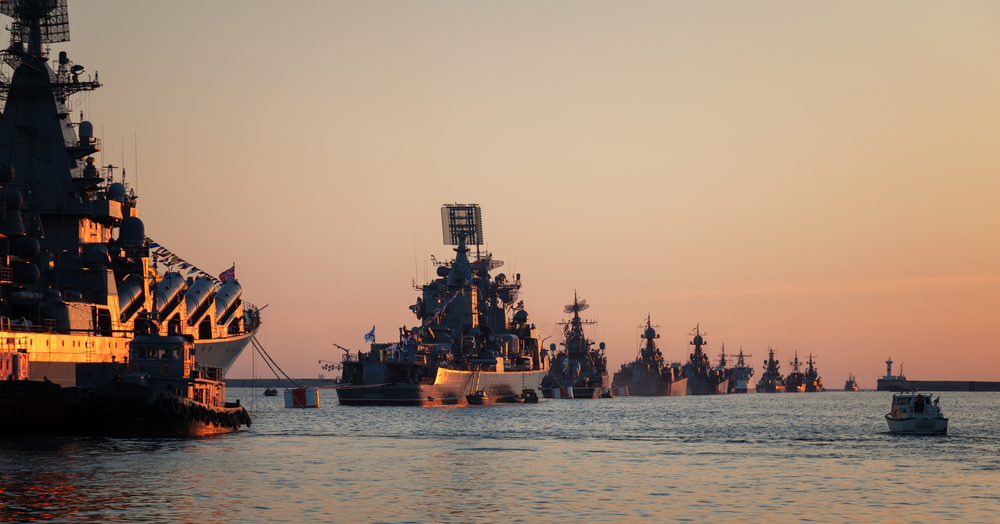
An amphibious or land-based intervention against Iran, such as that envisaged by the Millennium Challenge 2002 exercise, could become one of the most serious strategic errors in recent US history. Far from being a limited operation, the size of the theatre, the geographical complexity and Iranian preparedness, reinforced over more than two decades, point to a long, highly costly and difficult-to-control conflict. US technological advantages would be eroded in the face of saturation tactics and increasingly sophisticated ballistic capabilities. The likely outcome would not be a swift victory, but a protracted war of attrition with significant human casualties, the political cost of which would be difficult for any administration in Washington to bear.
As Washington assesses military options around Kharg Island and, more broadly, in the Gulf, a structural question emerges: has the United States truly adapted its approach to warfare to contemporary realities? In 2002, the Pentagon attempted to answer this question through ‘Millennium Challenge 2002 (MC02)’, an exercise designed to simulate a large-scale war against a Gulf adversary clearly inspired by Iran.
The scenario was explicit: a US intervention aimed at securing sea lanes, neutralising strategic capabilities and, in practice, carrying out an operation equivalent to a regional invasion combining naval, amphibious and land-based components. The exercise, which involved live drills and computer simulations, was intended to validate the doctrine of network-centred warfare and the supposed US technological superiority as a decisive factor
The result was the exact opposite. Within hours, the opposing force launched a pre-emptive strike combining missiles and swarms of fast boats, destroying a substantial part of the US fleet. The exercise was suspended, restarted under new rules and, even so, the same vulnerabilities reappeared. Unable to accept this structural defeat, the exercise was finally scripted to guarantee a US victory.
A simulated defeat that foreshadows real vulnerabilities
In its initial phase, MC02 was intended to demonstrate the superiority of a US military transformed by technology. The forces deployed operated under an architecture based on information superiority, advanced sensors and networked coordination, designed to provide total control of the battlefield.
The opposing force, under the command of General Paul Van Riper, opted for a radically different strategy. It avoided electronic communications, relied on physical messengers and used rudimentary means to transmit orders. This approach allowed it to evade US surveillance systems and preserve the element of surprise.
The ensuing attack was decisive. Massive salvos of missiles overwhelmed the defences, followed by coordinated attacks by small craft, some of a suicide nature. The US forces, despite their technological superiority, failed to react in time. This pattern, saturation, speed and dispersion, now forms the core of Iranian military doctrines.
Beyond the immediate impact, the episode revealed specific operational vulnerabilities. US naval defence systems, designed to intercept limited and sequential threats, were overwhelmed by the simultaneous nature of the attacks. Reliance on a centralised chain of command slowed reaction times, whilst the saturation of sensors and communications degraded real-time situational awareness. In tactical terms, the concentration of naval units in relatively confined spaces amplified the destructive effect of the offensive. This set of factors not only explains the scale of the simulated defeat but also foreshadows dynamics that could be replicated in a real-world scenario in the Gulf.
A defeat cancelled and a lesson neutralised
Faced with the scale of the setback (more than 20,000 casualties), the organisers suspended the exercise immediately. The losses were eliminated, the ‘destroyed’ units reintroduced, and the combat conditions radically altered. The objective shifted from experimentation to the validation of a pre-existing doctrine.
Upon resumption, the opposing force was severely restricted: reduced capabilities, an obligation to reveal positions, and restrictions on its tactics. In some cases, it was even prevented from attacking critical targets. The exercise gradually devolved into a controlled demonstration. When more open conditions were reintroduced, the same dynamics of vulnerability reappeared. This confirmed that the initial defeat had not been accidental, but structural. However, this lesson was not fully incorporated into the evolution of US doctrine.
Beyond the formal conduct of the exercise, this episode highlighted a deeper dysfunction in strategic planning processes. By transforming a simulated environment into a controlled scenario, precisely what ‘wargames’ are designed to reveal was eliminated: real flaws, surprises and vulnerabilities. In institutional terms, this implies that operational assumptions were not subjected to sufficient stress, reinforcing an excessive reliance on models that had not been validated against a truly adaptive adversary. This gap between simulation and operational reality remains one of the principal risks in the formulation of contemporary military strategies.
US doctrinal continuity since Vietnam
Since the Vietnam War, the United States has thoroughly modernised its weapons systems, but its fundamental operational logic has changed to a lesser extent. Centralised command, reliance on complex systems and the primacy of air superiority remain pillars of the model. This approach assumes an environment where communications and surveillance systems function without interruption. It also presupposes that the adversary will adopt predictable behaviours or those compatible with US frameworks. MC02 highlighted the limits of these premises. An adversary capable of fragmenting combat, saturating defences and evading sensors can neutralise these advantages. However, this realisation did not lead to a commensurate doctrinal transformation.
This doctrinal continuity has also been reflected in recent conflicts such as Afghanistan, Iraq and Syria. In Afghanistan, despite overwhelming military superiority, the United States failed to consolidate lasting political control after two decades of intervention. In Iraq, the rapid initial victory gave way to a protracted insurgency that eroded the initial strategic objectives. In Syria, the ability of state and non-state actors to adapt, disperse and operate in complex environments limited the impact of US technological superiority. These cases illustrate a recurring pattern: initial tactical effectiveness does not necessarily translate into strategic success, especially when the adversary avoids conventional confrontation and exploits the structural weaknesses of the US operational model.
Iranian adaptation: asymmetry, dispersion and ballistic power
In contrast, over the last two decades Iran has developed a doctrine specifically designed to counter US superiority. This is based on the dispersal of forces, the intensive use of asymmetric tactics and the strengthening of ballistic capabilities. Iranian forces are structured to survive an initial strike and continue operating in degraded environments. They prioritise mobility, decentralisation and redundancy, making it difficult to neutralise them through conventional campaigns. Furthermore, the development of ballistic and cruise missiles has provided Iran with the capability to strike bases, logistical infrastructure and naval units. This factor significantly alters the operational balance in the Gulf.
Beyond these general principles, Iran’s strategy follows a coherent logic that is deeply adapted to its geographical and political environment. Tehran has built a model of ‘defence in depth’ that combines multiple layers of deterrence: conventional forces, allied militias in the region, asymmetric naval warfare in the Gulf and increasingly sophisticated missile and drone systems. This architecture allows Iran to project power indirectly, avoiding direct confrontation whilst imposing constant costs on its adversary.
In the naval sphere, for example, the Iranian strategy does not seek to compete in terms of tonnage or technology, but rather to saturate and fragment the maritime space. The coordinated use of speedboats, naval mines, maritime drones and anti-ship missiles creates a highly contested environment where even the most advanced platforms can be overwhelmed by the volume and simultaneity of threats. This approach replicates almost exactly the model observed in the MC02, but now with real and operational capabilities.
In the field of ballistics, the developments are even more significant. Iran has developed a wide range of short-, medium- and, potentially, longer-range missiles, alongside increasingly precise guidance systems. These delivery systems enable attacks not only on fixed targets, such as military bases or energy infrastructure, but also on moving targets, including ships in the Gulf. Combined with reconnaissance and attack drones, these systems create an anti-access/area denial (A2/AD) capability that severely limits the freedom of manoeuvre of any force attempting to operate near its territory. Taken together, this strategy not only compensates for relative technological inferiority but is demonstrating a clear strategic advantage in terms of resilience, adaptability and the ability to impose sustained costs.
Recent losses: empirical validation of the MC02 scenario
Recent events in the context of the current conflict reinforce these conclusions. Despite the air superiority claimed by Washington, US forces have suffered significant losses in aircraft, drones and support systems, suggesting a much more contested operational environment than predicted by traditional models.
Various reports, alongside information confirmed by the Pentagon, point to a consistent pattern of attrition. The reported losses and damage include at least 17 destroyed MQ-9 Reaper drones, several F-15E fighter jets shot down or damaged, including one over Iranian territory, an F-35 hit by anti-aircraft systems, and an A-10 Thunderbolt II shot down. Added to this are critical losses of assets of high strategic value, such as a destroyed E-3 Sentry AWACS early warning aircraft and multiple KC-135 tanker aircraft, at least two of which were destroyed and several damaged, which are essential for sustaining prolonged air operations. Helicopters are also reported to have been affected, including one destroyed HH-60 and others damaged.
Furthermore, these data reveal a clear operational trend: Iran is not only capable of partially denying airspace, but also of attacking the key elements that enable the United States to project power, conduct refuelling, surveillance and maintain aerial persistence. This type of loss has a multiplier effect, as it is not limited to individual platforms but degrades the entire operational architecture. In strategic terms, this confirms the validity of the scenario outlined in MC02: the combination of integrated air defence, saturation and targeting of critical assets can rapidly erode air superiority, even against a technologically superior power.
Kharg, amphibious vulnerability and the logistics equation under ballistic pressure
In this context, the hypothesis of an operation against Kharg Island takes on central strategic relevance. It would likely be an amphibious operation aimed at seizing infrastructure critical to Iranian energy exports, with the objective of exerting direct economic pressure on Tehran. On paper, this type of operation could appear to be a limited, rapid and focused action.
However, in operational terms, an intervention of this kind highlights some of the most significant vulnerabilities of the US military model. Amphibious forces, by their very nature, depend on narrow and highly exposed maritime supply lines. Furthermore, they must operate near enemy territory, under the constant threat of missiles, drones, coastal artillery and asymmetric attacks. The initial landing phase involves a high concentration of troops, assets and naval platforms, which increases their vulnerability to coordinated attacks.
In this environment, Iranian ballistic capabilities play a decisive role. The ability to strike naval and logistical targets from a distance makes transport ships, command platforms and forward bases priority targets. This dynamic almost exactly replicates the conditions observed in the 2002 Millennium Challenge, where the concentration of forces and the saturation of defences led to the destruction of the US force in the early stages of the conflict.
The logistical factor thus emerges as a critical structural constraint. A sustained amphibious operation would require a continuous flow of supplies, reinforcements and technical support, all of which would be permanently exposed to attack. Unlike previous scenarios, where the United States operated with relatively secure supply lines, in the Gulf these lines would be under direct threat from the outset.
Iranian capabilities allow not only for the disruption of these flows, but for doing so repeatedly and in a staggered manner, generating a cumulative effect on US operational capacity. Every disruption to supplies, every instance of damage to a logistics vessel or support platform, would have immediate consequences for the sustainability of the operation on land.
In this context, the viability of an operation in Kharg depends not only on the success of the initial landing, but on the ability to maintain a sustained presence in a highly contested environment. And it is precisely in this dimension, logistics under ballistic pressure, that the operation presents its greatest structural weaknesses.
A strategic threshold under political pressure and internal fracture
Deploying ground or amphibious forces in this context would involve crossing a strategic threshold of great magnitude, but this risk can no longer be analysed solely in military terms. The decision comes alongside growing internal tension within the US administration itself. Recent reports point to a crisis in the chain of command, with significant disagreements between civilian officials and military commanders over the feasibility and risks of such an operation.
In this context, the dismissal of senior commanders by Defence Secretary Pete Hegseth, following their expression of reservations about a possible intervention, considered by some to be operationally unfeasible or excessively risky, reflects a worrying rift in the decision-making process. Such tensions are no minor matter: in complex military systems, the quality of planning depends largely on the ability of commanders to challenge assumptions and assess risks without political constraints. The narrowing of this critical space can lead to decisions based more on political imperatives than on rigorous strategic assessments.
Once an operation of this nature has begun, the dynamics of escalation would be extremely difficult to control. Every human casualty, every aircraft shot down and every ship damaged would increase the pressure, both internal and external, to intensify the conflict. The losses already observed in the air domain not only illustrate operational vulnerability but also foreshadow the kind of attrition that could occur in a land or amphibious phase.
Furthermore, the combination of factors, Iranian ballistic capabilities, the complex geography of the theatre of operations and extreme logistical dependence, creates an environment in which the notion of a ‘limited operation’ loses its meaning. The forces deployed would be exposed from the outset to sustained attacks, with little scope to withdraw without incurring significant costs.
In this context, the question is no longer merely whether the operation can be carried out, but whether there is strategic coherence between the political objectives and the means employed. Recent history shows that when this coherence breaks down, the result tends to be unplanned escalation and a progressive deterioration of the strategic position.
Considering these factors, including the internal fragmentation in Washington itself, an intervention of this kind cannot be considered a controlled action. It would, rather, be a strategic decision whose level of risk, in military, human and political terms, can, without exaggeration, be described as profoundly suicidal.
Khalil Sayyad Hilario
Founder & CEO SAHCO Consulting
Madrid, 5 April 2026
Contacter SAHCO
Pour en savoir davantage sur notre expertise et le déroulement de nos missions.


