
'/%3E%3C/svg%3E)
'/%3E%3Cpath%20fill='%23b2b2b2'%20d='M241%20382q0%2016%2017%2026%2017%2011%2042%2011t42-11q16-11%2017-26V269H241'/%3E%3Cpath%20fill='%239f7e00'%20d='M241%20379q0%2014%208%2023%209%209%2021%209%2014%200%2021-9%209-9%209-23V269h-59'/%3E%3Cpath%20d='M241%20339v-70h59v110q0%2014-9%2023l-6%205v-68h-15v72q-8%200-14-4v-68zm59%2040c0%2022%2015%2032%2029%2032%2021%200%2030-18%2030-32v-40h-59'/%3E%3Cpath%20fill='%239f7e00'%20d='M266%20277v5h2v12h-3v-5h2v-5h-9v5h2v5h-4v9h3v18h-5v10h34v-10h-5v-18h3v-9h-4v-5h2v-5h-9v5h2v5h-3v-12h2v-5zm42%20101q0%2010%206%2017%206%206%2015%207%2010-1%2016-7%206-7%206-17v-29h-43'/%3E%3Ccircle%20fill='%230044ad'%20cx='329.5'%20cy='372'%20r='6'/%3E%3Cellipse%20fill='%230044ad'%20cx='300'%20cy='340'%20rx='16'%20ry='21'/%3E%3C/svg%3E)




How to Effectively Test and Update a Contingency Plan

A well-designed contingency plan is not enough. It must be tested, adjusted, and updated regularly. This process ensures operational resilience in the face of any type of crisis. It helps prevent critical disruptions and improves decision-making during emergencies. This article guides you through best practices to ensure your contingency plan remains functional and relevant.
Understanding the Strategic Role of a Contingency Plan
Objectives and Scope of a Contingency Plan
A contingency plan aims to ensure business continuity in the event of a major incident. It helps limit impacts on operations, resources, and partners. Its scope may cover various areas, including logistics, communication, human resources, or technology. The plan must be adaptable and tailored to the specific context of the organization or company.
Differences from Other Risk Management Mechanisms
Unlike crisis management plans, a contingency plan does not merely react to emergencies. It anticipates potential disruptions and defines concrete response measures. It is therefore a preventive tool, whereas a crisis plan is reactive. Their complementarity strengthens overall organizational resilience.
Preparing the Contingency Plan Testing Phase
Defining Simulation Scenarios and Conditions
Before testing a plan, it is essential to select plausible yet diverse scenarios. These should cover multiple types of risks: technological, natural, human, or logistical. Each scenario must include clear parameters such as duration, potential impact, and involved stakeholders. Effective simulations rely on realism and scenario diversity.
Identifying Resources and Stakeholders Involved
Tests should involve key decision-makers from each operational unit. Required material and digital resources must also be identified. Coordinating internal and external stakeholders is essential to recreate a realistic context. External service providers should be included if they play a critical role in the operational chain.
To ensure the success of your tests, learn how contingency and emergency plans can be integrated to strengthen organizational resilience.
Methods for Testing the Effectiveness of a Contingency Plan
Tabletop Exercises and Virtual Simulations
Tabletop exercises test decision-making reflexes in a controlled environment. They involve presenting a crisis scenario and observing team responses. Virtual simulations replicate complex situations using digital platforms. These methods help identify weaknesses without mobilizing extensive resources.
Full-Scale Tests and Lessons Learned
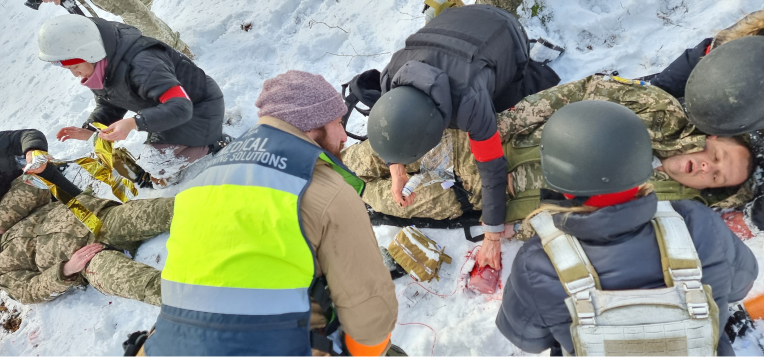
Full-scale tests involve realistic scenarios using all available resources. They assess actual response capacity. These exercises must be followed by detailed debriefings. Lessons learned help correct shortcomings and reinforce strengths.
Ensure the reliability of your contingency plan in hostile environments with expert support and tailored scenarios.
Analyzing Test Results
Assessing Team Responsiveness and Coordination
Response speed following the onset of disruption must be measured. Internal communication flow is also a key indicator. Any confusion or information loss should be documented. A responsive team is a trained and well-prepared team.
Evaluating the Adequacy of Mobilized Resources
Tests help determine whether planned resources are sufficient and properly used. Accessibility of equipment and compatibility of tools must also be verified. Any resource that proves ineffective in an emergency must be replaced or adapted.
Contact our experts to optimize your tests and adjust critical resources for all situations.

Updating a Contingency Plan After Testing
Identifying Weaknesses and Areas for Improvement
Each test should result in a concrete list of observations. Delays, technical failures, or missing procedures must be addressed. The objective is to improve the plan without waiting for a real crisis. Participant feedback should also be collected to refine future scenarios.
Integrating Adjustments into Operational Procedures
Once improvements are defined, they must be formalized in internal procedures. Documentation must be updated, validated, and disseminated. All changes must be clearly understood and adopted by relevant teams.
To secure and effectively update your contingency plan, benefit from our expertise in external security audits.
Role of Specialized Partners in Plan Updates
Technical Expertise from Firms Like SAHCO
Specialized firms bring an external and technical perspective. Their experience helps identify blind spots often overlooked internally. SAHCO supports organizations at every stage: audit, testing, training, and updates.
Support for Continuous Monitoring and Review
A contingency plan must evolve alongside organizational changes. An external partner can provide technical and regulatory monitoring. They can also conduct periodic reviews and strategic adjustments.
To strengthen your international mobility risk management capabilities, discover our tailored training programs designed to meet your needs.
Maintaining an Operational Contingency Plan Over Time
Scheduling Regular Tests
Tests should be scheduled several times a year based on identified risks. Effective planning includes different types of exercises to strengthen capabilities. Audit feedback and organizational changes must also be considered.
Ongoing Training and Team Awareness
An effective plan depends on well-informed teams. Training must be ongoing and adapted to different levels of responsibility. Practical workshops help reinforce understanding of roles during incidents.
To ensure the long-term effectiveness of your contingency plan, contact our experts for personalized support.
Conclusion
A tested plan significantly reduces losses during a crisis. It enables a fast and orderly recovery. Such rigor also builds trust among partners and donors. In the long term, it becomes a strategic asset for any organization. Waiting for a crisis to react exposes organizations to severe consequences. An anticipatory approach is essential, continuously strengthening plans and skills. Every organization should be able to respond quickly, clearly, and effectively.
Would you like to strengthen your contingency strategy? Contact SAHCO’s experts for personalized support.
Contacter SAHCO
Pour en savoir davantage sur notre expertise et le déroulement de nos missions.


