



Iran, Armageddon and the nuclear threshold: when war, prophecy and strategy converge
As the war against Iran challenges initial military calculations and shakes the global economy, a troubling combination of strategic doctrines, political pressure and apocalyptic narratives is beginning to influence the debate over how far the conflict could escalate.
Modern wars rarely evolve according to the plans conceived by those who initiate them. The current confrontation between the United States, Israel and Iran once again confirms this reality. What began as an operation intended to alter the regional strategic balance has turned into a crisis with economic, political and security implications that extend far beyond the Middle East.
Iran has demonstrated its ability to absorb military pressure while imposing significant costs on its adversaries. Its missile and drone capabilities, regional networks, and technological support from major powers such as China and Russia allow it to project pressure on multiple fronts simultaneously. In addition, its capacity to affect critical energy routes has shifted part of the conflict into the global economic system.
The consequences are already visible in energy markets and maritime trade. The Strait of Hormuz, the Red Sea and the routes of the Persian Gulf have become areas of permanent strategic risk. Maritime insurance premiums have surged and global logistics chains are beginning to absorb the impact of an increasingly unstable region.
As the conflict continues without a clear resolution, the strategic debate is shifting toward scenarios that until recently were considered unlikely. Among them is one that for decades remained deliberately outside operational discourse: the risk that a regional crisis could escalate to the use of nuclear weapons.
Alongside these military dynamics, another factor has begun to occupy an unexpected space in the American public debate: the influence of religious narratives in the interpretation of the conflict. A significant current within evangelical Christianity interprets conflicts in the Middle East as part of a prophetic sequence culminating in Armageddon, a final confrontation that many of its followers associate with nuclear destruction.
This debate took on a particularly sensitive dimension following a report by independent journalist Jonathan Larsen, according to which a commander of a U.S. combat unit told non-commissioned officers that the war against Iran was part of “God’s divine plan,” arguing that President Donald Trump had been “anointed by Jesus” to trigger Armageddon. The complaint filed with the Military Religious Freedom Foundation is part of more than 110 complaints recorded within 48 hours, coming from more than 40 units across at least 30 military installations.
These developments have generated concern in political and military circles, as they suggest that apocalyptic rhetoric has penetrated environments traditionally governed by strategic doctrine and institutional discipline.
Prophecy, Politics and Power: The Weight of Evangelicalism in the United States
The role of these narratives cannot be understood without examining the political influence of evangelicalism in the United States. A significant part of the American evangelical movement interprets world history through a doctrine known as dispensationalist eschatology. According to this theological perspective, the return of the Jewish people to the land of Israel and conflicts in the Middle East are part of a prophetic sequence culminating in a final war: Armageddon.
In many contemporary interpretations, this war is not imagined as a conventional confrontation but as a global catastrophe of mass destruction. In this context, nuclear weapons are interpreted as the instrument capable of producing the level of devastation described in apocalyptic texts. This interpretation does not necessarily mean that believers actively seek such an outcome. However, the conviction that a catastrophic-scale conflict is an inevitable part of history can influence the way certain sectors perceive contemporary geopolitical crises.
Israel’s central place in this narrative further reinforces this dynamic. Within this theology, the existence of the State of Israel and Jewish control of Jerusalem are fundamental elements in the fulfillment of biblical prophecy. This conviction has concrete political consequences. The evangelical movement constitutes one of the most influential electoral blocs in the United States, and its capacity for mobilization directly influences presidential and congressional elections as well as the orientation of U.S. foreign policy.
Israel and the Samson Doctrine: Nuclear Deterrence
To this ideological dimension is added a strategic reality widely discussed among specialists: the so-called Samson Doctrine in Israeli security strategy. The term derives from the biblical account in which Samson brings down a temple upon himself and his enemies. In modern strategic language it is used to describe a posture of extreme deterrence: if the existence of the State of Israel were threatened, the country could resort to its nuclear arsenal as a last resort.
Israel maintains a policy of strategic ambiguity regarding its nuclear capabilities. However, numerous international experts agree that the country possesses an operational nuclear arsenal. The objective of this posture is clear: to reinforce deterrence by sending the message that any attempt to destroy the State of Israel would trigger a devastating retaliation.
In a context of regional escalation, the interaction between doctrines of existential deterrence and ideological narratives further intensifies the strategic complexity of the crisis.
When War Does Not Evolve as Expected
History shows that the most dangerous wars are often those that extend beyond their initial objectives. In the current conflict, Iran has demonstrated a remarkable ability to absorb military pressure while retaining the capacity to impose costs on its adversaries. Its regional network of allies and its missile arsenal allow it to maintain constant pressure across multiple fronts.
If the conflict continues without decisive results, the risk of escalation will inevitably increase. When leaders perceive that the strategic balance is deteriorating or that the political cost of war is becoming unsustainable, options initially conceived as instruments of deterrence may begin to be considered within operational debate. It is in this context that the question of the nuclear threshold begins to appear in contemporary strategic analysis.
What Crossing the Nuclear Threshold Would Mean
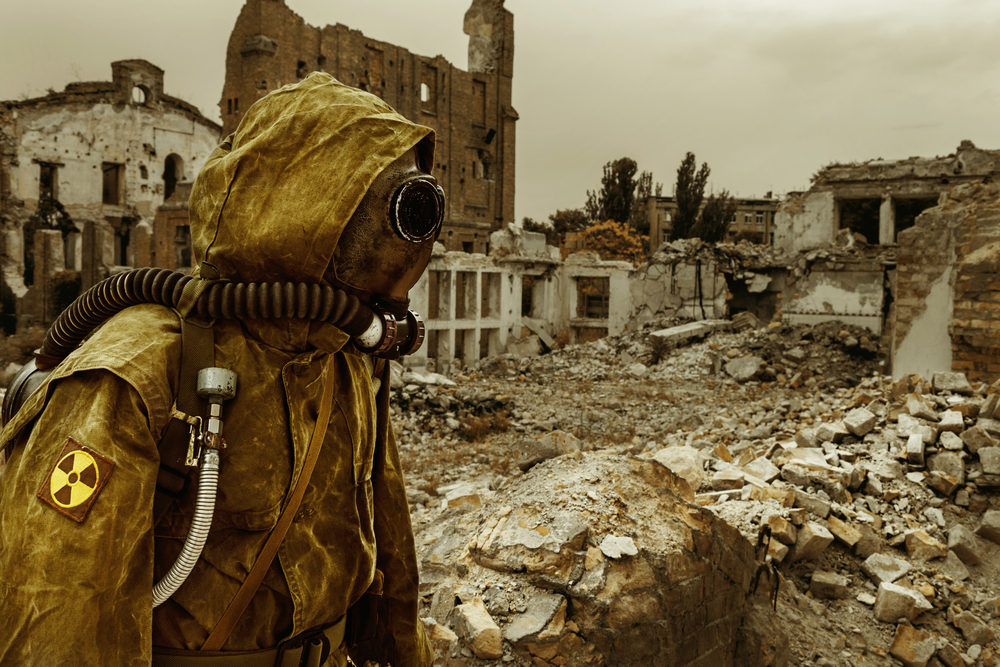
Although the use of nuclear weapons remains a hypothetical scenario, its consequences would be immediate, systemic and global.
At the regional level, a nuclear strike against Iran would trigger a generalized military response. Iran and its regional allies would respond with massive attacks against Israel, U.S. bases and strategic targets in the Gulf. The humanitarian impact would potentially be devastating. However, estimating the precise level of destruction or the number of casualties is difficult, since it is not known what type of nuclear warhead might be used or what the specific target of the attack would be. Affected cities could suffer massive destruction, healthcare system collapse and large-scale population displacement, while energy and logistical infrastructure across the region would be severely damaged.
At the economic level, the consequences would be immediate. The closure or prolonged disruption of the Strait of Hormuz, through which nearly 20 percent of the world’s oil passes, would trigger a global energy crisis. Oil and gas prices would surge, provoking an international recession.
For the international private sector, the impact would be profound. Energy, logistics, financial and infrastructure companies operating in the Middle East would face personnel evacuations, suspension of operations and massive losses. Global supply chains would experience prolonged disruptions.
The Reaction of Regional and Global Powers
A nuclear use in the Middle East would provoke immediate reactions among other regional and global powers.
Pakistan, the only Muslim-majority country possessing nuclear weapons, would face extraordinary internal and regional political pressure. The possibility that Islamabad could be drawn into the crisis, directly or indirectly, would introduce an additional nuclear dimension to the region.
Russia and China, both nuclear powers and key actors in the global strategic balance, would be compelled to respond diplomatically and possibly militarily to nuclear escalation in a region fundamental to global energy stability.
European powers, deeply dependent on energy imports from the Gulf, would face an immediate economic and security crisis. The European Union would have to simultaneously manage an energy crisis, a potential migration wave and a severe deterioration in international security.
The psychological impact on the international system would be equally profound. The use of nuclear weapons would break a strategic taboo maintained since 1945, radically altering global perceptions of nuclear stability.
The Most Dangerous Strategic Moment
The war between the United States, Israel and Iran now stands at an extremely delicate intersection between military strategy, regional rivalry and ideological narratives. Nuclear deterrence doctrines were designed to prevent the use of these weapons. However, when conflicts drag on and strategic calculations fail, political and psychological pressures can push actors toward increasingly extreme decisions.
In a war that is already reshaping the global energy balance and geopolitical stability, the central challenge is not purely military. The real question is no longer who will win this war, but whether the international system will be able to prevent it from becoming the first nuclear war of the twenty-first century, and perhaps the last.
Khalil Sayyad Hilario
Founder & CEO SAHCO Consulting
Madrid, March 7, 2026
Contacter SAHCO
Pour en savoir davantage sur notre expertise et le déroulement de nos missions.


