



Can the United States really face an “open” war against Iran and win it quickly?
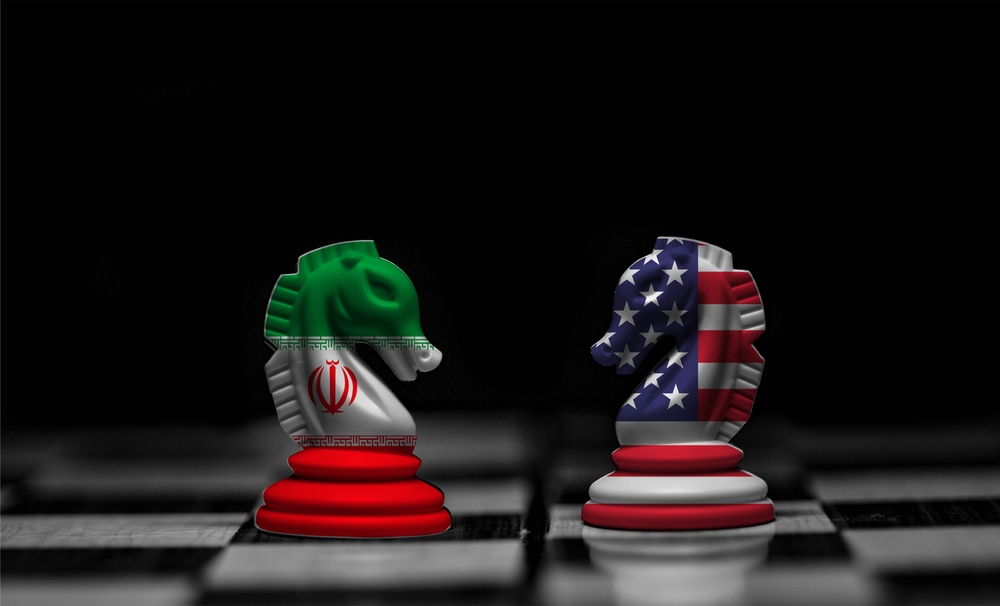
The open conflict between the United States and Iran is no longer a theoretical possibility, but a developing reality. Its onset does not respond to a shared strategic conviction regarding the utility of war, but rather to the progressive exhaustion of the political and diplomatic mechanisms that, for years, had contained the escalation. The transition from deterrence to confrontation has occurred not through an isolated decision, but through the accumulation of political pressures, expectations from allies, and credibility dynamics which, once certain thresholds were crossed, drastically reduced the room for manoeuvre.
Until the commencement of hostilities, public debate had tended to present the confrontation as a matter of discretionary choice: to attack or not to attack, to respond or to exercise restraint. The outbreak of the conflict reveals the limitations of that approach. The moment strategic credibility, internal politics, and perceptions of commitment to allies come to dominate the calculus, the available options cease to be fully voluntary. Military action becomes less a strategic choice than the result of a logic of political inevitability.
The start of the conflict confirms an uncomfortable reality: once escalation is activated, rationality does not disappear, but it operates within a much narrower framework. Policy makers act under the pressure to demonstrate resolve, avoid signs of weakness, and respond to external expectations, even when they are fully aware of the associated risks. In this context, war does not begin because it is expected to be brief, controlled, or decisive, but because the political costs of not acting have come to be perceived as higher than the risks of action.
This shift from strategic calculation towards a predominantly political calculation marks the tone of the conflict from its inception. Rather than a clash designed to achieve clearly delimited military objectives, the confrontation emerges as a process of escalation in which diplomatic exits have been eroded even before military operations define a new balance.
Political impulse and the disappearance of diplomatic exit routes
One of the most destabilising aspects of the current confrontation is that the pressure towards escalation is increasingly political and less strategic, both in Washington and Tehran. Public demands expressed by political leaders in the United States, Israel, and Iran, moralised narratives, and reputational costs have reduced the margin for compromise. When political objectives are formulated in absolute terms, especially on issues linked to the survival of the regime in Iran, the national security of Israel, or the deterrent credibility of the United States, diplomatic negotiation becomes politically risky.
Any concession can be presented, at an internal level or by regional allies such as Saudi Arabia or the United Arab Emirates, as a sign of weakness. Consequently, diplomacy risks becoming a performative exercise: an instrument to demonstrate firmness rather than to reach substantive agreements. This dynamic generates a classic “commitment trap”. Leaders in the United States and Iran face two unattractive options: resort to force and assume risks of regional escalation, or abstain and accept internal and external political and reputational costs.
The determining factor is not which of the two options is strategically more sensible, but which is less costly in the short-term political calculation. Wars arising from these types of dynamics tend to escalate rapidly and be prolonged over time. When credibility becomes the central currency of decision-making, signals harden, ambiguity disappears, and the probability of miscalculations increases. In this sense, the danger lies not only in the hostile intent of the United States or Iran, but in the gradual erosion of politically viable exits.
Operational reality. Why “limited war” is a myth
The assumption that the United States could carry out a clean and limited military action against Iran rests on several fragile premises: reliable access to regional bases, uncontested use of airspace, uninterrupted logistics, and an adversary willing to absorb attacks without responding in a significant way.
Each of these premises is questionable.
Geography, by itself, imposes severe restrictions. Iran is an extensive and densely populated state with considerable strategic depth. The great distances from the main American bases in Qatar, Kuwait, Bahrain, and the United Arab Emirates imply a heavy dependence on in-flight refuelling, a complex generation of air sorties, and sustained access to regional airspace. Host states—including Iraq, Kuwait, Qatar, and Saudi Arabia—subjected to internal political pressure and the fear of Iranian reprisals, could limit or withdraw their support once hostilities have commenced. These limitations tend to intensify, not disappear, as the conflict is prolonged.
The capacity for resistance is an equally critical factor. Modern air and missile campaigns are resource intensive. Precision ammunition, interceptor missiles, spare parts, tanker aircraft, and naval logistics depend on complex supply chains involving the United States, Europe, and regional allies. The question is not whether these resources exist in absolute terms, but whether they can be supplied constantly, on a large scale, while protecting deployed forces from attacks.
More importantly, the control of escalation is asymmetrical. Iran has strong incentives to respond to any significant attack. From Tehran’s perspective, absorbing a blow without reprisal would invite additional pressure from the United States and Israel and put the survival of the regime at risk. The response, therefore, would be neither irrational nor reckless, but a predictable reaction to a threat perceived as existential. Once retaliation occurs against bases in Iraq, Syria, Qatar, or maritime assets in the Persian Gulf and the Red Sea, the notion of a “limited” conflict quickly crumbles.
Policy makers in Washington then face a familiar dilemma: escalate to restore deterrence or stop and assume reputational damage in front of allies like Israel. Neither of the two options favours an orderly conclusion to the conflict.
Iran's deterrent posture and the technological dimension
The Iranian military posture is usually analysed primarily in terms of ballistic missile capacity, but its deterrent strategy is broader and more adaptive. It focuses on dispersion, redundancy, and the capacity to impose costs across multiple domains, rather than competing symmetrically with the military power of the United States.
Missile forces play a central role, particularly due to their capacity to threaten US bases in Iraq, Syria, Kuwait, Qatar, and Bahrain, as well as critical infrastructure and maritime traffic associated with Saudi Arabia, the United Arab Emirates, and Oman. Even the most advanced defence systems, including those deployed by the United States and Israel, depend on finite stocks of interceptors.
Beyond kinetic systems, Iran has invested significantly in resilience. This includes hardened infrastructure, decentralised command and control, and an increased emphasis on cybersecurity and electronic warfare. There are credible signs that the country seeks to reduce its dependence on Western digital ecosystems, strengthen its networks against infiltration, and diversify its navigation and communications systems.
The environment of intelligence and sensors is also evolving. Improvements in radar coverage and electronic surveillance—including those derived from technical cooperation with Russia and, to a lesser extent, China—can complicate US air operations without the need to completely deny aerial dominance.
External technical assistance amplifies these effects. Although no great power, including Russia or China, seems willing to intervene militarily in defence of Iran, indirect support in cyber capacities, intelligence, and defensive technologies can significantly increase the difficulty of a prolonged campaign, raising costs without provoking a direct confrontation.
Implications for the international private sector
For companies and security professionals, the most relevant risks are not concentrated in the initial phase of hostilities, but in what happens afterwards if the conflict is prolonged or spreads regionally. There are several high-probability risk vectors:
- Maritime and energy disruption: Even limited interference in the maritime routes of the Strait of Hormuz, the Persian Gulf, or the Red Sea would have disproportionate effects on insurance markets, transport rates, and energy prices, affecting Europe, East Asia, and key importing economies.
- Sustained operational instability: A prolonged campaign would alter risk calculations in sectors such as aviation, construction, logistics, and infrastructure in Iraq, Saudi Arabia, the United Arab Emirates, Jordan, and Turkey, with indirect effects on European and Asian companies.
- Cyber escalation and collateral effects: A parallel confrontation in cyberspace is highly likely, which could affect energy systems, ports, financial institutions, and satellite-dependent services, including assets in Europe and Asia, even without a physical presence in the region.
- Political volatility in host countries: States such as Iraq, Jordan, or Bahrain could face internal unrest or political readjustments under pressure, affecting the stability of access and transit agreements considered stable in peacetime.
For the private sector, the appropriate response is not prediction, but preparation. Planning must assume friction, delays, and indirect effects as baseline conditions, not as extreme assumptions.
A war difficult to control, impossible to ignore
With the start of hostilities between the United States and Iran, the debate ceases to be hypothetical. The question is no longer whether a war is plausible, but how a conflict will evolve that has begun driven more by accumulated political dynamics than by a clear strategic logic. Escalation does not occur because it promises decisive results, but because, once certain thresholds are crossed, political and reputational inertia severely limits the options for containment.
The first stages of the conflict confirm the fragility of assumptions regarding control, proportionality, and duration. Operational restrictions, structural incentives for retaliation, and a technological environment characterised by persistent friction point to a confrontation that is intrinsically difficult to manage and even more difficult to close in an orderly manner. As the number of affected actors increases, including regional allies of the United States and states exposed to indirect Iranian reprisals, the conflict tends to expand functionally, even if there is no formal declaration of regional war.
The indirect external involvement of third states, even without explicit alliance commitments, adds further layers of complexity. Technical support, cooperation in intelligence, and assistance in domains such as cyberspace raise costs and prolong instability without necessarily crossing the thresholds that would activate a direct confrontation between great powers. This type of environment favours prolonged, ambiguous conflicts that are resistant to quick solutions.
For the international private sector and the security community, the central lesson is unequivocal. The main risk no longer resides in anticipating the start of the conflict, but in underestimating its duration, its cumulative character, and its second and third-order effects. Organisations that continue planning on the basis of a brief or contained disruption run the risk of remaining exposed to an environment of sustained volatility. In a conflict that is already underway, preparation for prolonged scenarios is not a prudent option: it is an operational necessity.
Khalil Sayyad Hilario
Founder & CEO, SAHCO Consulting
Madrid, March 5, 2026
Contacter SAHCO
Pour en savoir davantage sur notre expertise et le déroulement de nos missions.


