
'/%3E%3C/svg%3E)
'/%3E%3Cpath%20fill='%23b2b2b2'%20d='M241%20382q0%2016%2017%2026%2017%2011%2042%2011t42-11q16-11%2017-26V269H241'/%3E%3Cpath%20fill='%239f7e00'%20d='M241%20379q0%2014%208%2023%209%209%2021%209%2014%200%2021-9%209-9%209-23V269h-59'/%3E%3Cpath%20d='M241%20339v-70h59v110q0%2014-9%2023l-6%205v-68h-15v72q-8%200-14-4v-68zm59%2040c0%2022%2015%2032%2029%2032%2021%200%2030-18%2030-32v-40h-59'/%3E%3Cpath%20fill='%239f7e00'%20d='M266%20277v5h2v12h-3v-5h2v-5h-9v5h2v5h-4v9h3v18h-5v10h34v-10h-5v-18h3v-9h-4v-5h2v-5h-9v5h2v5h-3v-12h2v-5zm42%20101q0%2010%206%2017%206%206%2015%207%2010-1%2016-7%206-7%206-17v-29h-43'/%3E%3Ccircle%20fill='%230044ad'%20cx='329.5'%20cy='372'%20r='6'/%3E%3Cellipse%20fill='%230044ad'%20cx='300'%20cy='340'%20rx='16'%20ry='21'/%3E%3C/svg%3E)


Operational limits and geopolitical consequences of the use of ground forces in Iran
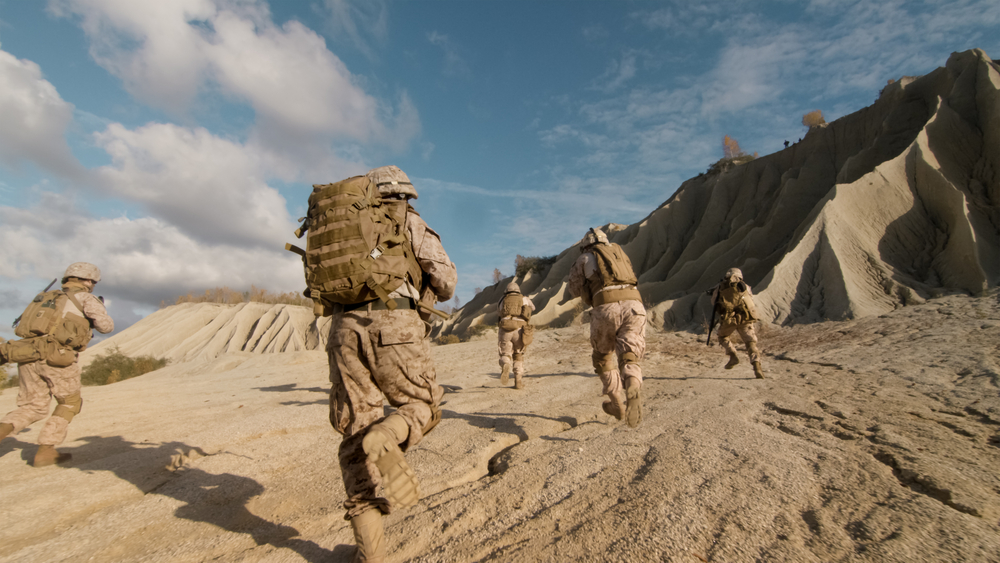
A ground intervention in Iran could become the most serious strategic mistake made by the United States in generations. Unlike previous campaigns, the size of the country, its geography, and the preparedness of its armed forces would make a long and costly war inevitable. U.S. technological advantages would be drastically reduced in ground combat, while Iran possesses extensive asymmetric warfare capabilities and has been preparing for every possible scenario for the past 23 years. The likely outcome would be a prolonged conflict with significant human losses for U.S. forces. A human cost that would be politically difficult for any administration in Washington to sustain, including that of President Trump.
The U.S. military intervention against Iran has evolved at a pace that reflects not only the dynamics of modern conflicts but also a notable lack of tactical and strategic clarity in the definition of its political objectives. Since the beginning of the military campaign, the administration of President Donald Trump has repeatedly reformulated the reasons justifying the war, without providing, to date, a coherent and stable explanation to Congress or the U.S. Senate regarding the exact reason for this war or the final objective of the military campaign.
Initially, the White House defended airstrikes against Iranian facilities as a preventive action aimed at preventing Iran from developing nuclear weapons. Shortly thereafter, the official narrative began to incorporate a second objective: degrading Iran’s military capability to destabilize the region through its network of allies and militias. As the conflict intensified, the narrative shifted again. Administration officials began to argue that the campaign also aimed to restore freedom of navigation in the Persian Gulf, following attacks on vessels and threats to the Strait of Hormuz that had impacted global energy trade.
Over the following weeks, the strategic argument continued to expand. From Washington, discussions began to include structurally weakening the Iranian regime, limiting its military industry, neutralizing its nuclear infrastructure, and, in some cases, even provoking changes in the country’s internal political balance. Each of these objectives implies very different levels of military commitment, ranging from targeted operations to a prolonged campaign of strategic pressure.
The central problem is that these objectives have not been articulated within a coherent strategic framework. In hearings and political debates in Washington, lawmakers from both parties have demanded more precise explanations regarding the nature of the conflict, the scope of operations, and the criteria that would determine the end of the war. So far, however, the administration has avoided formulating a clear doctrine regarding the expected duration of the conflict, its cost, or the conditions necessary to consider U.S. objectives fulfilled.
This context of strategic ambiguity is key to understanding why, after weeks of bombing with no quick victory in sight, proposals for limited ground operations inside Iran are beginning to emerge. These initiatives are presented as tactical solutions to specific problems (controlling nuclear material, exerting economic pressure on Iran, or ensuring international energy transit), but they also reflect a deeper dynamic: when the political objectives of a war are not clearly defined, military options tend to multiply without a clear strategic direction.
Analyzing these proposals therefore requires more than a technical assessment of their military feasibility; it requires understanding the political and strategic framework in which they are being considered. A war whose objectives have evolved over time, with no clear planning, and whose justification before U.S. democratic institutions remains, to a large extent, incomplete.

The Strategic Context: A War Already Affecting the Global Energy System
The most visible dimension of the conflict has been its impact on the global energy market. Iran controls, directly or indirectly, one of the critical chokepoints of international hydrocarbon trade: the Strait of Hormuz, through which approximately 20% of the world’s seaborne oil passes.
During the first weeks of the war, drone and missile attacks in the Persian Gulf, along with Iranian threats against maritime traffic, caused a partial collapse of trade routes and a sharp increase in oil prices. Some countries have begun deploying warships to protect commercial navigation and escort oil tankers. At the same time, the United States has expanded its air campaign against Iranian strategic installations. Among the targets is Kharg Island, Iran’s main oil export terminal, responsible for nearly 90% of its crude exports.
This escalation has transformed what initially appeared to be a localized military conflict into a geopolitical crisis with systemic consequences: global energy tensions, involvement of multiple regional actors, and growing political pressure in Washington to demonstrate tangible progress. It is precisely in this context that proposals for limited ground operations have emerged.
Three Premises That Shape Any Operation in Iranian Territory
Before analyzing these options, it is necessary to understand three strategic factors that condition any ground intervention.
First. The political balance of the conflict does not necessarily favor a short war. For certain regional actors, a prolonged war could gradually weaken the Iranian regime or even trigger an internal crisis within the country. From this perspective, time is not a constraint but a strategic tool.
Second. The United States has a significant rapid deployment capability. While organizing a large-scale conventional invasion would require months of logistical preparation and force buildup, Washington could mobilize several thousand rapid-response troops within weeks, including airborne units, amphibious operations, and special forces. However, any such deployment would immediately face the complexity of Iran’s geography: a vast territory, mountainous in many regions and with extensive desert areas, historically favorable to defense and challenging for offensive operations. In this context, even relatively small contingents could become exposed to a particularly hostile operational environment.
Third. The supposed technological superiority of the United States does not necessarily translate into a decisive advantage in the current scenario. While U.S. military power has long been based on dominance in aviation, satellites, and electronic warfare, this balance could be eroded by several factors. Iran has demonstrated a significant capacity to target military infrastructure in the region, and numerous U.S. bases and radar systems deployed in Gulf countries have been subjected to continuous drone and missile attacks, reducing the effectiveness of the regional surveillance and defense network. In addition, there is a high probability of indirect technological support from powers such as China or Russia, which could provide assistance, intelligence, or equipment without formally entering the conflict. In this context, even relatively simple systems (drones, tactical missiles, mines, or ambushes) can significantly limit traditional U.S. technological advantages when combat shifts to the ground.
These three premises explain why even seemingly limited operations can trigger escalation dynamics.
Scenario 1: Special Operations Against Nuclear Facilities
One of the most discussed proposals involves deploying special forces units to locate, secure, or destroy highly enriched uranium stockpiles in Iranian nuclear facilities, even though this material has already been relocated and its current location remains unknown. The strategic reasoning appears straightforward: if this material is eliminated or confiscated, Iran’s ability to develop a nuclear weapon would be reduced. However, this approach faces several operational obstacles.
First, a large portion of Iran’s nuclear facilities are deeply buried or protected by underground infrastructure. Although special forces can infiltrate and extract relatively quickly, intelligence agencies do not know where this material is currently located; moreover, destroying or recovering nuclear material hidden underground requires complex and time-consuming excavation efforts. In military terms, this means that a small infiltrated unit could remain exposed for hours or even days in enemy territory, very likely without sufficient ammunition, as Iran’s terrain represents a logistical and supply nightmare.
Second, there is an intelligence problem. Following the initial bombings, there is no absolute certainty regarding the exact location of all Iranian nuclear material stockpiles. Some of the enriched uranium has been relocated before or after the airstrikes. If this uncertainty proves accurate, an operation initially conceived as a limited incursion could turn into a prolonged search in hostile territory. At that point, deploying additional troops becomes an unavoidable logistical necessity.
Scenario 2: Seizing Kharg Oil Island
A second proposal involves capturing and controlling Kharg Island, Iran’s main oil export hub. The strategic logic would be to use this infrastructure as a tool of economic pressure. If Iran loses its primary crude export route, its economy, already under international sanctions for years, would suffer a significant blow. From a theoretical standpoint, the operation appears simpler than a deep incursion into mainland territory. The island lies about 26 kilometers off the Iranian coast and is only eight kilometers long. However, the military reality is far more complex.
Occupying an island close to enemy territory entails significant vulnerabilities. Deployed forces would fall within range of coastal artillery, anti-ship missiles, drones, and explosive boats. Moreover, maintaining a long-term occupation would require a substantial troop presence, not a small special operations unit. Military history shows that islands located near enemy territory tend to become extremely difficult to defend. Without total naval and air superiority, the risk of isolation or prolonged attrition would be high.
Finally, there is a political issue: destroying or capturing a strategic energy infrastructure could trigger retaliatory attacks on oil facilities in other Gulf countries, expanding the regional conflict.
Scenario 3: Securing the Strait of Hormuz Coastline
The third option analyzed in some strategic circles is likely the most ambitious: deploying troops along the Iranian coastline to neutralize missile systems threatening navigation in the Strait of Hormuz. The objective would be to fully reopen trade routes and ensure the safe transit of oil tankers.
At first glance, the mission responds to an urgent economic necessity. However, its military complexity is immense. The Iranian coastline along the Persian Gulf stretches for hundreds of kilometers and features a fragmented geography of bays, ports, and dispersed military bases. To prevent mobile missile launchers from returning after a U.S. withdrawal, a permanent military presence would be required. In practice, this would amount to a partial occupation of Iranian territory.
Moreover, even if coastal missile systems were neutralized, the problem of naval mines and drones would remain. Naval experts estimate that clearing a mined strait can require weeks of specialized operations. Consequently, the immediate impact on maritime trade could be limited.
The Central Risk: The Logic of Military Escalation
All three scenarios share a common characteristic: none guarantees quick results, but all create strong incentives to expand military commitment. Once U.S. troops are deployed in enemy territory or vulnerable positions, political and military pressures will arise to reinforce their protection. The sequence is well known in military history:
- A limited operation deploys a small contingent.
- That contingent becomes exposed to attacks or logistical difficulties.
- Reinforcements are sent to ensure its security.
- Those reinforcements require new infrastructure and supply lines.
- The military commitment gradually expands.
This dynamic has characterized numerous contemporary conflicts, from Afghanistan to Iraq.
The Strategic Dilemma of Washington and Tel Aviv
From the perspective of U.S. foreign policy, the dilemma is clear. On one hand, there is domestic pressure to demonstrate tangible military progress after weeks of bombing. Limited ground operations may appear as a way to achieve concrete results without engaging in a full-scale invasion.
On the other hand, the track record of such interventions suggests that “limited” operations rarely remain limited. The interaction between ambitious strategic objectives—such as weakening the Iranian regime or ensuring global energy security—and seemingly modest tactical operations creates a dangerous gap between means and ends.
The Threshold of an Irreversible Strategic Decision
The debate over a potential ground intervention in Iran goes far beyond a simple discussion of military options. In reality, it would involve crossing a strategic threshold whose consequences could shape U.S. international standing and Middle Eastern stability for decades. Limited incursions, special forces operations, or the seizure of key infrastructure are often presented as controlled tactical actions. However, historical experience shows that once U.S. troops enter enemy territory, escalation dynamics become extremely difficult to contain.
In the Iranian case, this risk is amplified. The country’s size, complex geography, military preparedness, and capacity to sustain a prolonged conventional and asymmetric war mean that any foreign ground presence could quickly turn into a long-term open conflict. Even operations designed as limited could require constant reinforcements, expanded supply lines, and growing casualties, generating increasing political and military pressure to escalate the war.
The central question, therefore, is not whether a ground intervention would be technically possible, but whether the United States would be willing to bear the immense human, strategic, and political cost it would inevitably entail. Crossing that threshold could drag Washington into a war of unpredictable scale. In such a scenario, what is currently presented as just another military option could ultimately become an unprecedented strategic catastrophe for the United States.
Khalil Sayyad Hilario
Founder & CEO SAHCO Consulting
Paris, March 16, 2026
Contacter SAHCO
Pour en savoir davantage sur notre expertise et le déroulement de nos missions.


