



Managing Risks in Hostile Environments

Exposure to hostile environments is no longer limited to armed conflict zones. Political instability, high levels of criminality, social tensions, natural disasters, cyber threats, or deteriorating health conditions are now among the risks faced by many organizations operating internationally or on sensitive sites. In these contexts, protecting employees and ensuring business continuity become strategic priorities.
Anticipating risks in hostile environments is not a matter of occasional defensive measures, but rather a structured approach to risk management, human preparedness, and operational governance. This article provides a clear overview of the challenges hostile environments pose for companies, methods to identify and mitigate these risks, and concrete levers to effectively protect field teams, in line with Sahco’s approach.
Understanding what risks in hostile environments mean for companies
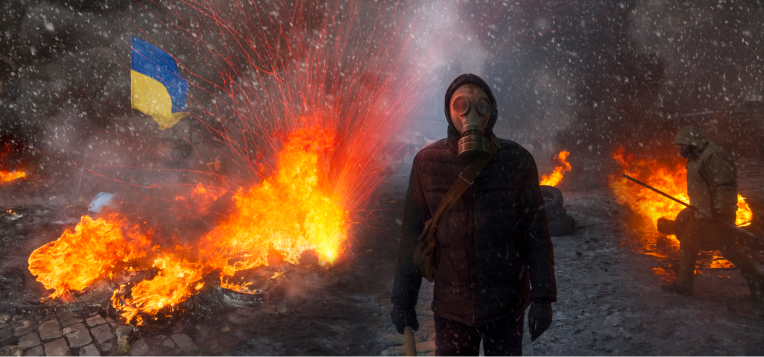
A hostile environment is characterized by conditions in which security, stability, or predictability are degraded. For a company, this may involve exposed industrial sites, subsidiaries located in unstable regions, employees on business travel, or teams operating under restrictive regulatory and social conditions.
Risks are often multiple and interconnected. They include direct security threats such as assaults, kidnappings, or targeted violence, as well as indirect risks like supply chain disruption, reputational damage, abrupt suspension of operations, or employer liability. The challenge lies in the fact that these risks evolve rapidly and are rarely isolated.
For companies, failing to anticipate such environments means unnecessarily exposing employees and weakening their ability to operate sustainably.
Identifying and analyzing activity-specific risks
The first step in anticipating risks in hostile environments is to move beyond a generic approach. Each company has its own risk profile, shaped by its sector, geographical footprint, nature of operations, and level of team exposure.
Effective analysis is based on a detailed understanding of the local context, internal vulnerabilities, and critical dependencies. This includes identifying factors likely to directly affect employee safety, such as frequent travel, isolated sites, reliance on local contractors, or high public visibility.
This analysis phase makes it possible to prioritize risks, assess their probability and impact, and lay the foundations for a realistic prevention strategy. To support this process, Sahco works with companies on operational risk analysis and assessment. You can learn more by visiting the page dedicated to strategic and operational advisory services.
Anticipating risks through a structured contingency plan
In hostile environments, anticipation relies on the implementation of a contingency plan. This enables companies to prepare for plausible scenarios without waiting for the situation to deteriorate.
An effective contingency plan defines clear activation thresholds, options for business continuity or activity adaptation, and a transparent decision-making chain. The objective is not to predict every possible crisis, but to avoid improvisation when weak signals turn into concrete incidents.
For companies, such a plan plays a critical role in protecting employees while also limiting financial, legal, and reputational impacts. It serves as a genuine management tool for security, HSE, and operations leadership.
When there is uncertainty about the robustness of existing arrangements, an external review can be decisive. Sahco notably offers external security management audits, available here.
Preparing teams exposed to hostile environments

Technical systems and strategic plans alone are not sufficient. Team protection also depends on employees’ ability to understand their environment, adopt appropriate behaviors, and respond effectively in degraded situations.
Training employees exposed to hostile environment risks significantly reduces vulnerability. Such training develops situational awareness, stress management, decision-making under pressure, and essential security reflexes. It also strengthens collective coherence and teams’ ability to apply established procedures.
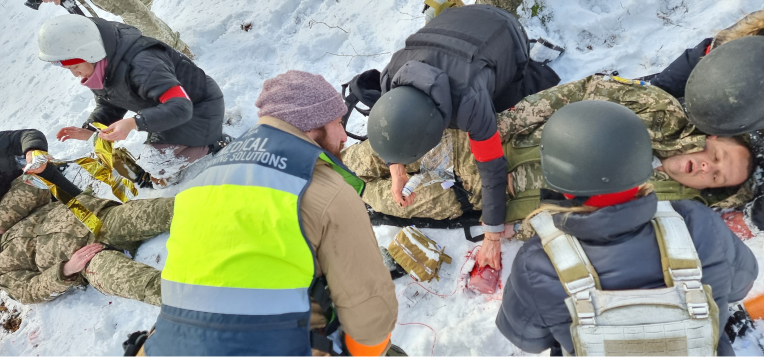
In this perspective, Sahco offers immersive training adapted to sensitive contexts, notably the HEAT C-TECC training, which combines hostile environment preparation with emergency medical response.
Linking anticipation and crisis response
Anticipating risks in hostile environments does not mean eliminating all crises. It does, however, make them easier to manage. The contingency plan prepares scenarios, while the emergency plan governs immediate actions when an incident occurs.
This articulation is essential to avoid improvised decisions, contradictory messaging, and team disorganization. It also secures internal and external communications, an often underestimated but critical issue in sensitive contexts.
Companies that invest in this comprehensive preparation strengthen their resilience and credibility, both with employees and with partners and clients.
Examples inspired by the corporate context
A company operating isolated industrial sites can anticipate risks linked to social unrest or local security deterioration by defining scenarios for activity reduction, access control reinforcement, or team reorganization. These measures, prepared in advance, help prevent employee exposure when tensions rise.
Another example: an international services company may integrate travel limitation thresholds, repatriation procedures, or enhanced remote-working solutions into its framework in the event of a security or health crisis.
In these situations, anticipation protects teams while maintaining a minimum level of operational continuity.
FAQ – Risks in hostile environments and companies
What is meant by risks in hostile environments for a company?
These include all threats that may affect employee safety and business continuity in unstable or degraded environments.
Are all companies concerned?
Yes, as soon as they operate internationally, on sensitive sites, or in contexts exposed to security, social, health, or environmental risks.
What is the difference between anticipation and an emergency plan?
Anticipation structures preparation and potential scenarios, while the emergency plan governs the immediate response when an incident occurs.
Is team training really effective?
Yes. Tailored training reduces exposure to risks, improves decision-making, and strengthens both individual and collective security.
Contacter SAHCO
Pour en savoir davantage sur notre expertise et le déroulement de nos missions.


