



Humanitarian Security: Site Audits, Drills and Realistic Simulations

In humanitarian contexts and sensitive environments, security cannot rely solely on written procedures or stated intentions. Field reality demands a concrete, tested, and regularly challenged approach. For humanitarian organizations as well as companies operating in high-risk areas, humanitarian security is built on three essential pillars: site audits, drills, and realistic simulations.
These three levers make it possible to move from theoretical security to genuinely operational security, capable of protecting humanitarian teams, reducing vulnerabilities, and improving crisis response capacity. This article examines their complementary role and how Sahco Consulting integrates them into a holistic risk management approach.
Humanitarian Security Confronted with Field Realities
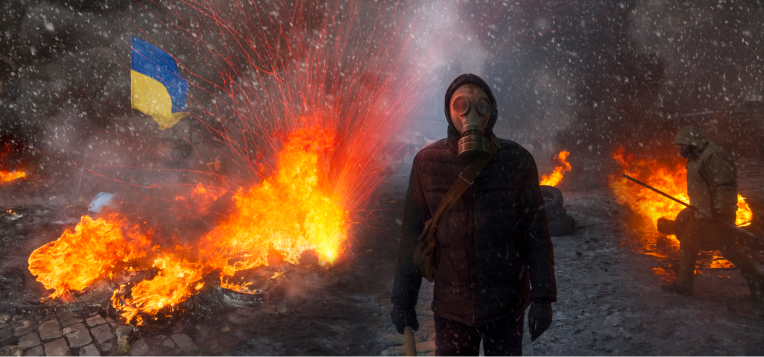
Humanitarian security evolves in environments marked by instability, unpredictability, and operational pressure. Armed conflicts, targeted violence, opportunistic criminality, community tensions, or natural disasters directly expose humanitarian staff and deployed personnel.
In such contexts, the gap between headquarters-defined procedures and their real implementation can become a major risk factor. Audits, drills, and simulations are specifically designed to reduce this gap by confronting security frameworks with operational reality.
Site Audits: Understanding Real Vulnerabilities
A site audit is the first step in an effective humanitarian security strategy. It enables an objective analysis of the environment, facilities, practices, and local organization to identify the real vulnerabilities faced by teams.
A site audit goes beyond infrastructure checks. It includes analysis of flows, access points, security procedures, behaviors, as well as the team’s capability to apply instructions under degraded conditions. It also assesses the alignment between identified risks and actual mitigation measures.
At Sahco Consulting, audits are designed as decision-support tools. They provide an operational reading of the field and form the basis for pragmatic, directly actionable recommendations. To explore this approach further, consult the dedicated page on external security management audits.
Drills: Testing Procedures and Reflexes
Security drills are the natural extension of audits. They verify whether defined procedures are understood, mastered, and applicable by humanitarian teams. Unlike simple awareness sessions, drills confront participants with simulated scenarios under time and stress constraints.
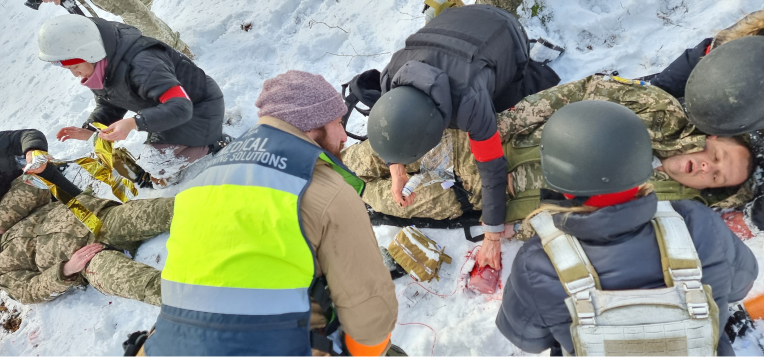
These drills may cover various scenarios: security incidents, evacuations, casualty management, communication failures, or sudden contextual deterioration. Their objective is not to put teams in difficulty, but to identify friction points, misunderstandings, and missing reflexes.
Insights from drills make it possible to adjust procedures, clarify roles, and improve coordination among actors involved in humanitarian security.
Realistic Simulations: Getting Closer to Actual Conditions
Realistic simulations go further than standard drills. They aim to reproduce, as much as possible, the real conditions of a crisis: psychological pressure, degraded environments, incomplete information, and multiple interactions.
In humanitarian security, realistic simulations allow teams to test their decision-making capacity in uncertain contexts, manage stress, and apply procedures under near-field conditions. They frequently reveal significant gaps between what is planned and what is actually feasible.
Sahco Consulting prioritizes this immersive approach because it promotes durable learning and stronger ownership of security procedures. Realistic simulations also help build collective confidence and team cohesion.
Integrating Audits, Drills and Simulations into a Coherent System
Taken in isolation, each of these tools provides limited value. It is their integration that structures a true humanitarian security strategy.
Audits identify vulnerabilities and priorities.
Drills test procedures and reflexes.
Realistic simulations expose teams to field complexity.
This complementarity embeds security in a process of continuous improvement rather than a reactive or occasional logic.
To support this structuring, Sahco Consulting also provides strategic and operational advisory services, aligning security frameworks with field realities.
Training Teams to Strengthen System Effectiveness

No audit or simulation can be fully effective without appropriate human preparation. Training is an essential lever to ensure humanitarian teams understand security stakes, apply procedures, and react appropriately.
Training offered by Sahco Consulting, including the HEAT C-TECC course, fits into this global logic. It reinforces situational awareness, stress management, and the ability to intervene under degraded conditions.
Practical Applications in Humanitarian Contexts
A humanitarian organization with several field bases may begin by conducting site audits to identify security discrepancies across locations. Targeted drills can then test local procedures, while realistic simulations prepare teams for critical scenarios such as evacuations or major security incidents.
In another context, newly deployed teams may benefit from simulations to accelerate their familiarization with security frameworks and improve coordination.
FAQ – Humanitarian Security and Operational Mechanisms
Why conduct site audits regularly?
Because contexts evolve rapidly, and yesterday’s vulnerabilities may not be today’s.
Are drills useful if procedures already exist?
Yes. They verify real understanding and implementation of procedures by teams.
How are realistic simulations different from standard drills?
They reproduce near-real conditions, integrating stress, uncertainty, and operational complexity.
Who should participate in audits and simulations?
Field teams, operational managers, and security focal points to ensure a comprehensive approach
Contacter SAHCO
Pour en savoir davantage sur notre expertise et le déroulement de nos missions.


