








PAD (Preparation for Expatriation)
The Preparation for Expatriation training course is a specialised programme designed for professionals preparing for long-term international assignments in corporate or humanitarian contexts, where success depends on the ability to adapt quickly to new environments, cultures, and operational realities. It is tailored to corporate employees, NGO workers, and managers who may be deployed abroad and required to operate effectively within unfamiliar organisational structures, diverse teams, and, in some cases, complex or high-risk settings. These assignments often involve new responsibilities, increased autonomy, and the need to navigate cultural, professional, and personal challenges simultaneously. In environments characterised by change, uncertainty, and cross-cultural interaction, preparation becomes a critical factor—not only for ensuring operational effectiveness, but also for supporting personal resilience, fostering strong working relationships, and enabling sustainable performance throughout the assignment.
About the
PAD programme
Preparing for expatriation is a critical step for professionals assigned to long-term positions abroad, whether in corporate or humanitarian contexts. Relocating to a new country—often with different cultural, organisational, and operational environments—requires more than technical expertise; it demands adaptability, awareness, and a strong understanding of both professional and personal challenges.
Professionals deployed internationally frequently operate in unfamiliar settings characterised by cultural differences, new management structures, varying regulatory frameworks, and, in some cases, elevated security risks. These transitions may involve:
- Adapting to new cultural and social norms.
- Managing teams across diverse backgrounds.
- Navigating organisational and operational differences.
- Ensuring personal safety and well-being.
- Maintaining performance and accountability in complex environments
This programme aims to equip participants with the knowledge, skills, and mindset required to successfully transition into international assignments and operate effectively in their new environment.
The primary objective is to ensure that expatriates are well-prepared, resilient, and operationally effective, enabling both individual success and organisational performance.
Key benefits by attending our course
Participants will develop key skills to:
- Understand the dynamics and challenges of expatriation
- Strengthen adaptability and intercultural competencies
- Develop management and operational skills for international contexts
- Gain awareness of organisational structures and mandates (corporate and humanitarian)
- Apply practical tools for effective field or international assignment preparation
- Integrate security awareness and risk management into daily operations
The programme combines theoretical foundations with practical application, ensuring readiness for real-world assignments.
Target audience
The training is designed for:
- Corporate employees preparing for long-term international assignments
- NGO and humanitarian staff deploying to field missions
- First-time expatriates or professionals with limited international experience
- Managers transitioning into leadership roles abroad
- Headquarters staff supporting or transitioning to operational roles
This programme is particularly relevant for professionals who must adapt quickly to new environments while maintaining high levels of performance and responsibility.
Methodology and instructors
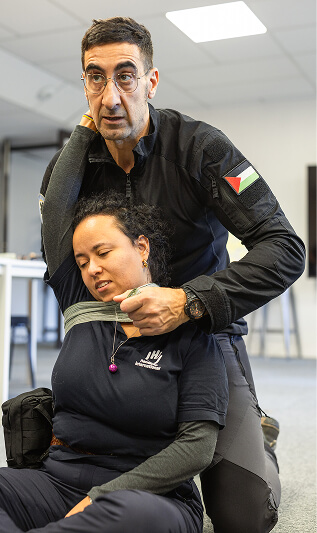
The training adopts a highly practical and interactive approach, focused on real-life application and participant engagement.
It is structured around two core components:
-
Applied theory
Interactive sessions covering essential frameworks and concepts, including:
- Expatriation challenges and success factors
- Cultural awareness and adaptation models
- Organisational structures (corporate and humanitarian)
- Core management principles (project, HR, finance)
- Security and risk awareness
-
Intensive practice
Practical exercises designed to simulate real expatriation challenges:
- Case studies and scenario-based discussions
- Role-play exercises (cross-cultural communication, management situations)
- Problem-solving workshops
- Group work and peer exchange
Learning is reinforced through:
- Structured feedback from instructors
- Sharing of participant experiences
- Progressive exposure to realistic and complex scenarios
Training is delivered by professionals with extensive experience in international assignments, field operations, and expatriate management.



What will you learn from the PAD training?
This training is based on realistic scenarios that enable participants to develop practical skills to ensure their own safety and that of their team whilst on the move.







Fundamentals of expatriation
- Key challenges and success factors of international assignments
- Differences between corporate and humanitarian environments
- Roles, responsibilities, and expectations in expatriation
- Understanding global organisational structures and mandates
Participants will gain a clear understanding of how expatriation impacts both professional performance and personal well-being.
Cultural awareness and adaptation
- Intercultural communication and behaviour
- Managing cultural differences in professional settings
- Building relationships in diverse environments
- Adapting leadership and management styles
Focus is placed on developing cultural intelligence and flexibility, essential for effective integration.
Operational and management skills
- Introduction to project management in international contexts
- Human resources management across cultures
- Financial basics and budgeting principles
- Organisational coordination and reporting
Participants will strengthen their ability to manage teams, resources, and operations effectively abroad.
Security and risk management
- Understanding security environments and risk levels
- Personal safety and situational awareness
- Organisational security protocols and best practices
- Decision-making under pressure
Security management is presented as a core component of expatriation, integrated into daily professional activities.
Personal preparedness and resilience
- Psychological and emotional preparation for expatriation
- Managing stress, isolation, and cultural adjustment
- Work-life balance in international assignments
- Building resilience and maintaining well-being
Participants will develop strategies to ensure sustainable performance and personal stability.
Communication and stakeholder engagement
- Communicating effectively in multicultural environments
- Managing internal and external stakeholders
- Navigating organisational hierarchies and expectations
- Conflict management and negotiation basics
Deployment preparation and practical tools
- Pre-departure planning and logistics
- Understanding administrative and legal requirements
- Tools and checklists for effective onboarding in-country
- Best practices for the first weeks in assignment
- Training Outcomes
By the end of the training, participants will be able to:
- Transition effectively into international assignments
- Adapt to new cultural and organisational environments
- Manage teams and operations in diverse contexts
- Apply security awareness and risk mitigation practices
- Maintain performance, resilience, and well-being abroad
Our certificates
Our methodology integrates multi-source intelligence, scenario modelling, and forward-looking analysis to identify emerging threats and opportunities.




Movement

Control
Resilience
Control
Facilitate successful long-term international assignments
Support your employees through cultural transitions and operational challenges. Reach out to SAHCO Consulting to ensure your expatriates are ready to perform effectively in their new environments.
Ensure your team is fully prepared.