







Humanitarian Access Negotiation
The Humanitarian Access Negotiation training course is a specialised programme designed for professionals operating in conflict-affected or highly complex environments, where safe access to populations or areas depends on effective engagement with both state and non-state actors. It is tailored to personnel from non-governmental organisations (NGOs), humanitarian agencies, and media organisations who, in the course of their work, may be required to negotiate with local authorities, armed groups, militias, or other influential stakeholders to ensure access, security, and the continuity of their activities. In environments characterised by fragmented power dynamics and elevated risk levels, negotiation becomes an essential tool—not only for mitigating threats, but also for securing humanitarian access and enabling the delivery of assistance to vulnerable populations.
About the
Access Negotiation programme
Negotiating humanitarian access has become a critical capability for field operations. Teams deployed in conflict-affected or unstable environments frequently engage with actors exercising territorial control, political authority, or coercive influence.
These interactions may involve situations characterised by tension, risk, and ambiguity, requiring a careful balance between humanitarian principles, operational objectives, and security considerations. Negotiation extends beyond the management of immediate risks and encompasses key operational requirements, including:
- Securing authorisations for programme implementation.
- Ensuring sustained access to affected populations.
- Facilitating the importation of supplies and equipment.
- Negotiating access to infrastructure and communication channels.
The primary objective is to ensure both safe access for humanitarian personnel and effective access for local communities to essential assistance and services.
Key benefits by attending our course
Participants will develop key skills to:
- Understand the principles and dynamics of humanitarian negotiation.
- Strengthen individual negotiation capabilities in field environments.
- Develop institutional negotiation capacity.
- Apply practical tools for the preparation, conduct, and follow-up of negotiations.
- Integrate humanitarian principles into complex negotiation processes.
The programme combines theoretical and practical elements to enable direct application in real-world operational contexts.
Target audience
The training is designed for:
- Personnel from non-governmental organisations (NGOs) and humanitarian agencies deployed in field environments.
- Programme managers and project coordinators.
- Security and humanitarian access teams.
- Journalists and correspondents operating in conflict-affected areas.
- Organisations operating in contexts of restricted access or fragmented territorial control.
This programme is particularly relevant for professionals who engage directly with armed groups or local authorities in sensitive and complex environments.
Methodology and instructors
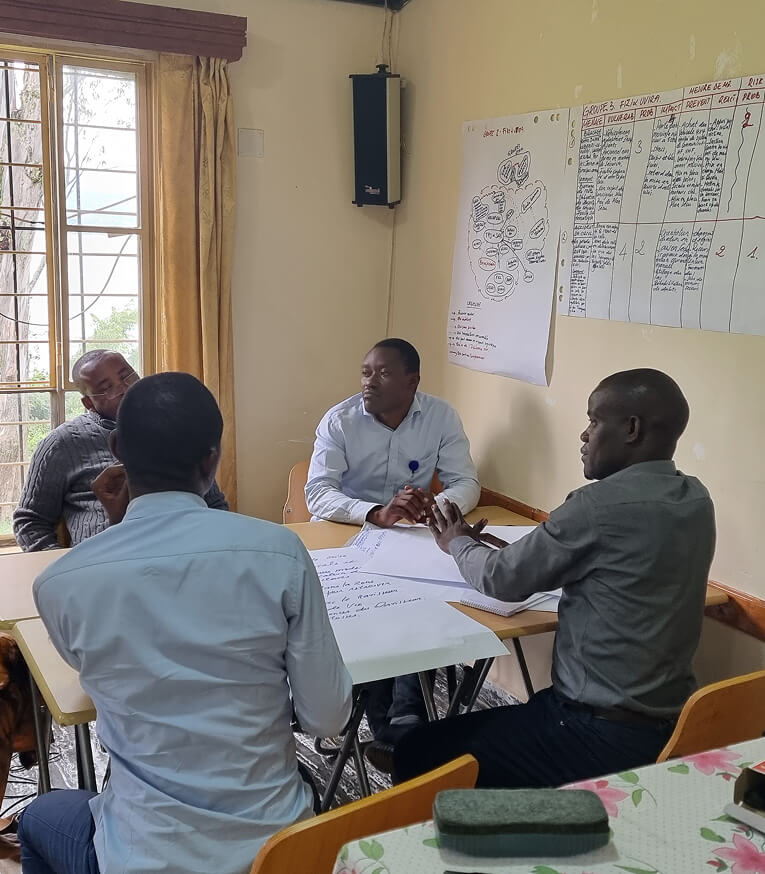
The training course adopts a highly practical and interactive approach, with a strong focus on participant experience and engagement.
It is structured around two core components:
- Applied theory:
Interactive sessions based on established conceptual frameworks for humanitarian negotiation, supported by real-life case studies and analysis of operational contexts. - Intensive practice:
Role-play exercises, negotiation simulations, and dynamic scenarios designed to replicate real-world situations.
Learning is reinforced through:
- Structured feedback from instructors and observers.
- Exchange of experience and peer learning among participants.
- Gradual introduction of contextual variables and unforeseen circumstances.
Training is delivered by professionals with extensive experience in negotiation within humanitarian and conflict-affected environments, engaging with a wide range of stakeholders.

What will you learn from the Humanitarian Access Negotiation training?
This training is based on realistic scenarios that enable participants to develop practical skills to ensure their own safety and that of their team whilst on the move.

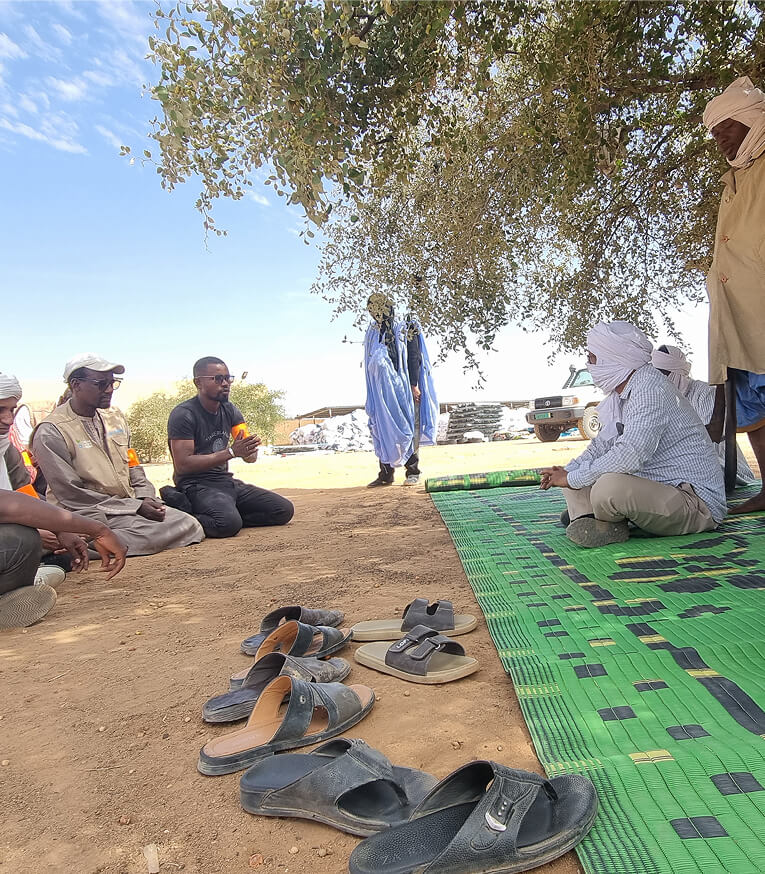
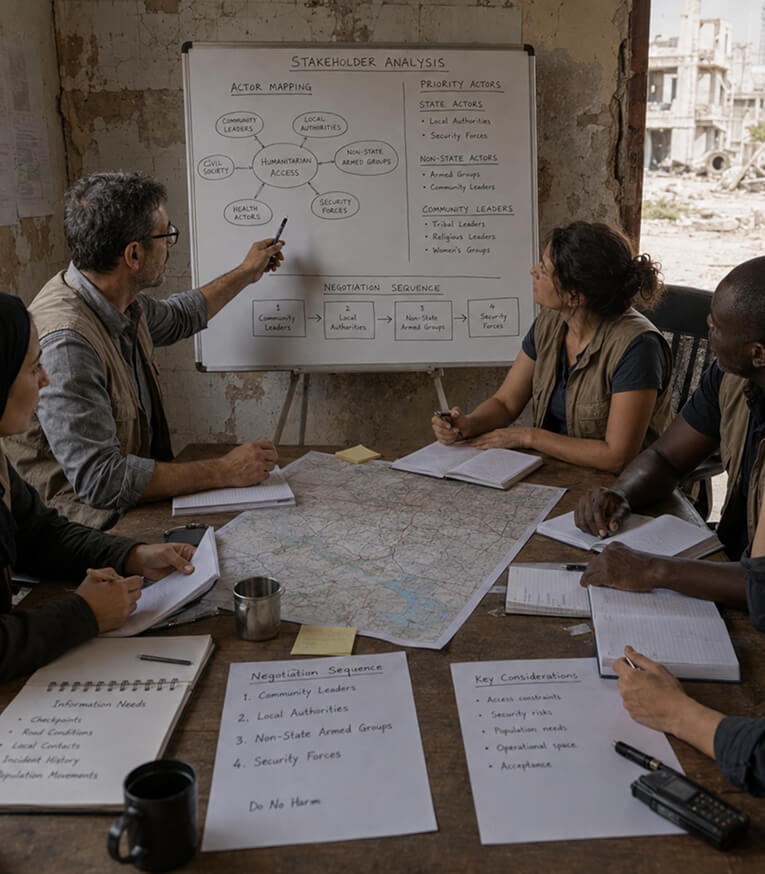
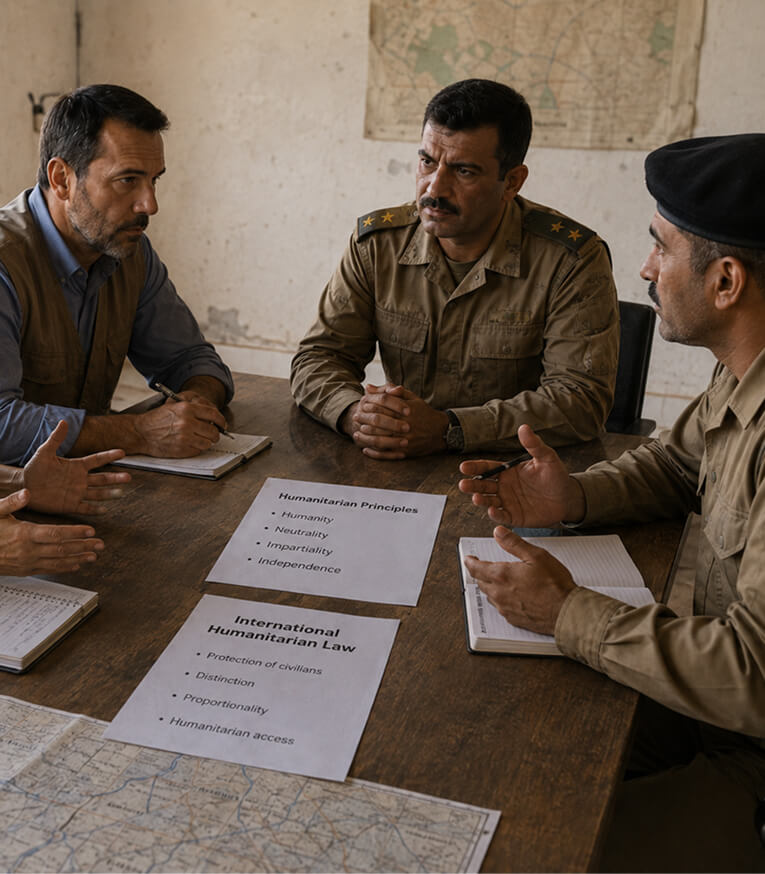
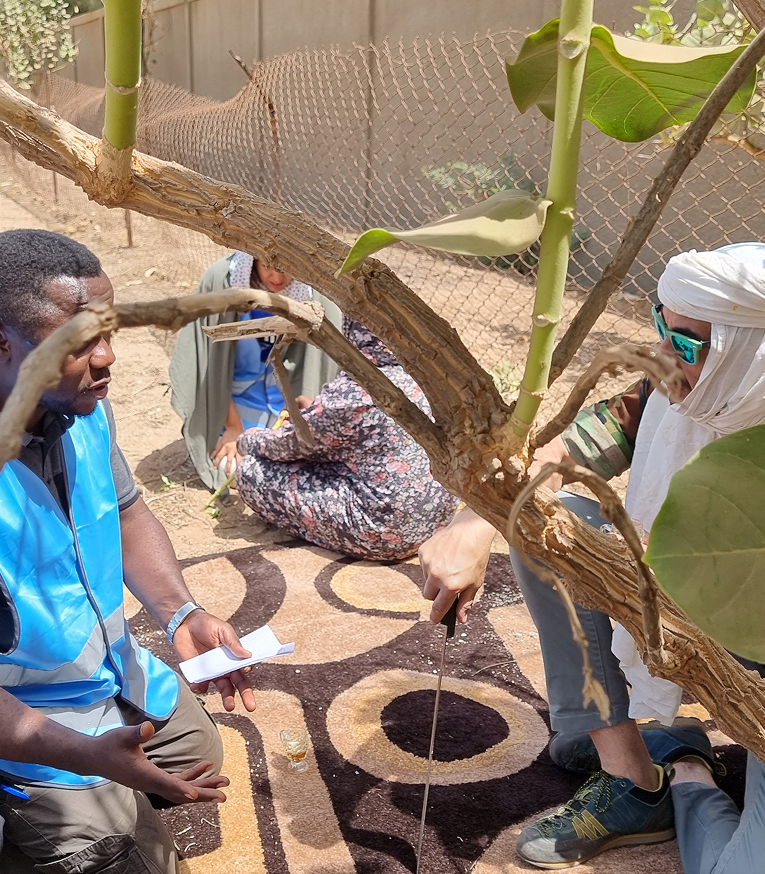
Fundamentals of humanitarian negotiation
- Key principles of humanitarian access negotiation.
- Distinctions between humanitarian negotiation and other negotiation approaches.
- The negotiation cycle and its key phases.
- Core components of an effective negotiation process.
Negotiation strategies and preparation
- Defining negotiation objectives (“what to negotiate”).
- Development of context-specific arguments.
- Identification of negotiation margins and leverage.
- Strategic preparation prior to engagement.
Stakeholder and context analysis
- Identification and analysis of key stakeholders.
- Understanding interests, motivations, and power dynamics.
- Assessment of organisational strengths and vulnerabilities.
- Development of a comprehensive overview of the negotiation environment.
Legal and advocacy tools
- Application of international humanitarian law (IHL) as a reference framework.
- Consideration of other relevant legal and regulatory frameworks.
- Argumentation based on principles, legitimacy, and mandate.
- Identification of sources of influence and leverage.
Conducting and monitoring negotiations
- Application of strategies and tactics in realistic scenarios.
- Development and formalisation of agreements (verbal and written).
- Monitoring and evaluation of outcomes.
- Continuous improvement of individual and organisational capabilities.
Our certificates
Our methodology integrates multi-source intelligence, scenario modelling, and forward-looking analysis to identify emerging threats and opportunities.



Movement

Control
Resilience
Control
Secure essential access in conflict-affected regions
Engage effectively with state and non-state actors to ensure project continuity. Contact SAHCO Consulting to master the field negotiation techniques required for sensitive humanitarian missions.